- Back to the future of work
- Posts
- IRLs Biblical Styles
IRLs Biblical Styles
Getting your distributed team together f2f isn't new. It's 3000 years old.

Scott Markovits
January 03, 2023
IRL biblical style
Last week I returned from Berlin, Germany 🇩🇪. I decided to make a trip to meet a bunch of people I've connected with, mentored, and followed over the last number of years. Yep, I've decided to up my relationships #irl. I understand and have personally experienced the impact of spending time with someone and chatting over coffee, a beer, or by the fire. I plan to write a 3 part piece on the topic of IRLs and getting your team together. This post will cover the idea of getting the whole team together and how often. The next post will focus on the need of being part of a community & the impact on mental health of spending time together. The final chapter will cover what exactly should you do when getting the team together.
One of the incorrect beliefs some people derived (and sadly still hold on to) from the pandemic is that remote means #wfh. So working remotely means being alone in a dark apartment wearing a hoodie and isolated from the world. Basically like this 👇

Meaning remote work would be the end of collaboration, conversations, and interaction between human beings. Yet if you ask any remote OG, we'll all emphasize how important it is to have the opportunity to gather f2f as often as possible. Whether a company IRL or individual employees working together from a coffee shop. I can personally attest to the impact these f2f opportunities make. And this recent Berlin trip only went to reinforce those beliefs I've developed over the years. I'm an extrovert and went to great lengths to connect with colleagues remotely while at InVision. Every day I randomly DM'd a colleague on Slack and asked if they were interested in a 5 min zoom call. Everyone loved it and the idea took off. It was quickly tagged #5minfacetime. So I had a great relationship with everyone on my team remotely. In 2019 the entire team got together at a company IRL in Arizona. The relationships my team had before and after the four days were like night and day.
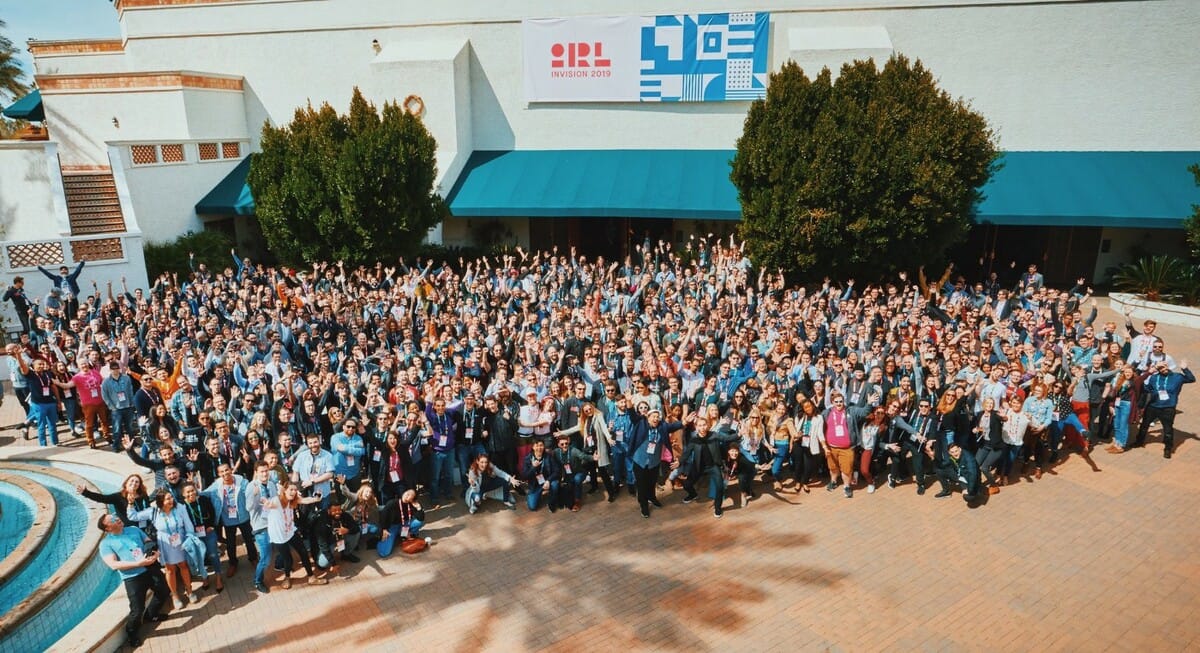
So important are IRL opportunities in the future of work, that blog posts are being written, podcast episodes recorded, and a whole new industry to support these meetups is taking off. So while we may think IRLs are something for the future of how we engage and interact with our team, the concept is actually 3500 years old.
Tribes or squads V1
Back in 2014, Spotify launched a 'new' concept of teaming up colleagues called squads. The idea was for self-organizing autonomous groups that sit together and share a team mission/goal. Many successful startups have hailed this approach to better align the individual employees and teams within the organization to maximize productivity and success.
Though launched in 2014, this squads concept launched 3500 years ago when the Hebrews (Jewish people) left Egypt. I'll spare the whole exodus story but if you want to learn more, spend the weekend streaming 10 commandments (for the old-school version) or Prince of Egypt (for the animated version).
For some background
The Jewish people were comprised of 12 tribes (12 sons of Jacob). When they conquered the land of Israel, the territory was divided into 12 portions. So just picture the division of the country into tribes with their own unique flags, customs, and mission like the Marketing, Sales, Engineering, and Customer Experience within your company. Yet, all were aligned with the greater nation and its flag, customs, and mission. Tribes also had unique jobs or roles within the grander nation. Royalty, priests, merchants, olive growers, and more. Day to day, the people within each tribe communicated and collaborated mostly within their own tribe. Just like we do today within our companies. So much so that individuals within companies rarely chat (especially unrelated to work) with colleagues on a different team or department. I saw this experience when going to InVision's IRL as noted above. During each meal over the 4 days, teams seemed to silo themselves at a different table. The iOS team sat at one table, while the APAC Sales team sat at their own table. I personally went against the grain and for each meal sat at a new table to meet people. Knowing if it weren't for this event I'd never have met or spoken with 90%+ of the people I met during the meals.
In a remote or hybrid model, this is only exacerbated because there is no kitchen to sit in for lunch or company-wide beers after work. Where there's an opportunity to build relationships across teams. So it requires intentionality of the leadership teams to create these opportunities for colleagues to spend time getting together.
The office as a temple to converge
Forward-thinking companies like Atlassian and Salesforce are completely redesigning their office spaces for their new purpose. Team building; not work. While other companies are again trying to offer amenities to attract people into the office. CoVid has taught us there's simply no interest in that. The future workspace will be designed to create opportunities for people to drop into an office whenever they see fit. Companies like Atlassian and Salesforce understand they can't force their employees back into the office. Rather they are looking to create opportunities for people to spend time together whether to simply socialize or to collaborate over coffee.
Solomon's temple acted in the same way. It was open 365 days a year. People would come to the temple if they had a requirement to bring sacrifices/gifts to the temple or when they simply wanted to come and have a deeper spiritual connection. While in Jerusalem they had the opportunity to meet and spend time with others across all the tribes.
How often and how many?
The number one question I've been asked over the past years regarding IRLs is how often should they occur. The answer is as often as possible. Before you freak out and start calculating budgets and how much that's going to cost, take a breath. Let's share some context about what this means. In the next post, I'll go into more depth about how often your team should meet up and whether in the future the company will be responsible for employee engagement or pass that off to local communities.
The entire company had been in a specific location every single day in the past. In the future that's certainly not the case but how often should they actually be together? It's not 0 and not 365. So what's the right number? The next question is the importance and opportunity for the entire team or groups of individuals to get together. While we were in an office we tended to spend time with the people on our direct team. So what's the opportunity for supporting individual or small get together?
Why should the team spend time meeting others face-to-face?
Most importantly and before thinking about how often or who gets together is why people should get together. F2f interactions have a direct impact on the productivity and success of both the employee and the company as a whole. Spending time with others #irl also can have a significant impact on one's mental health. We all learned during the pandemic how tough it is to be isolated. But truly what's the impact and should the company make a direct effort to better support their teams' mental health? In the next post, we'll go into depth on both of these items too. Including a personal story and the impact of #wfh vs #wfa has had on me during and post-CoVid.
Once again, the bible gives us direction on the importance of getting the wider company (nation) together and how often that happens. That magic number is 3. Now, you're probably freaking out thinking about how much you'll need to raise in the next round just to get the team together. Don't worry!
Your entire company should get together once a year at minimum. Twice is better but no less than once a year as an entire unit. Now is where flexibility comes into play. Depending on how globally distributed your team is can determine whether that second time is the entire company or not. If the team is widely distributed then you can look at either getting specific teams together (Support, Product, etc) or based on regions EMEA, Americas, or APAC. While the first option loses that ability for employees to connect across the larger team it does depend on the connection within the specific team.
Another option your team should explore and support is covering the costs of individual employees or small groups meeting in person. So reimbursing/paying for the train ticket and lunch for an employee or group in Brussels to go and hang out with a colleague or team in Amsterdam for the day. A few great companies like Human Made are doing this and creating a culture that truly supports engagement within its culture.
While f2f time is crucial for team relationship building, it simply can't happen a couple of times a year. In between these irl opportunities, companies and leaders must invest in intentional opportunities for teams to connect and build trust. In addition, companies should start thinking about how to better support their employees' engagement within their own local communities. And how to bring that engagement back online to foster the virtual team connection. I'll be writing a blog post about each of the items noted above, so stay tuned.
If you aren't sold yet on the importance and impact of IRLs on your team's success here's a post with some great findings Doist learned after doing their IRL. Feedback was anonymous to help ensure it was shared. And it's quite clear the deeper connection to the company, team, and mission at 95%+ for each. Which will only help grow their business.
If your team has run company retreats or supports teams getting together and has stories, learnings, or data showing the impact on employee happiness and engagement, I'd love to hear from you (and include your story in an update to this post).